Gamo 2023Gamo 2023
Organic
Heroic
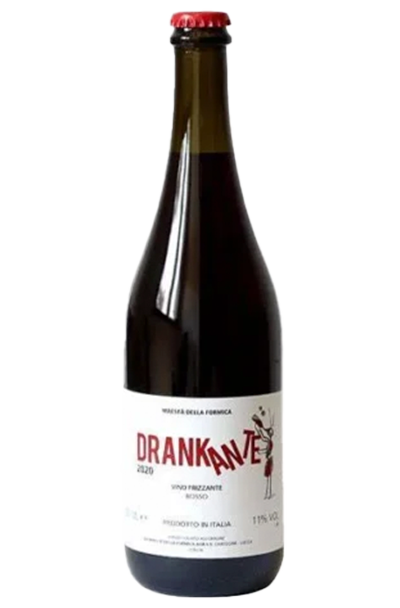
- Bodega: Maestà della Formica
- Tipología: Red wine
- Variedad: Mezcla de tintos con Syrah, Gamay, Sangiovese, Abrusco, Ciliegiolo y algunas variedades locales desconocidas.
- Ubicación y altitud del viñedo: Campo en la comuna de Gallicano y Cascio en la comuna de Molazzana – 500 mts
- Área del viñedo: 4 Ha
- Edad de las cepas: 40-70 años.
- Prácticas agrícolas: Biodinámicas
- Tipo de levadura: Indígenas.
- Vinification: Fermentación en depósito con 15 días de maceración, crianza en acero. Procede de fermentación espontánea, no ha sido sometido a ninguna forma de filtración ni estabilización. Mínima presencia de sulfitos.
- Crianza: En tanques de acero inoxidable (20%) y barricas de cinco años (80%).
- Filtración: Sin filtrar
- Sulfitos:
$850.00
Our crops, in biodynamic agriculture, arise from the need to support and support the vine project, that is, the planting of the first Riesling vineyard in the Apuan Alps.
All agricultural productions are certified as organic by ICEA.
It is very difficult to obtain certification for Maestà della Formica preserves, since there are almost always wild ingredients that are difficult to certify.
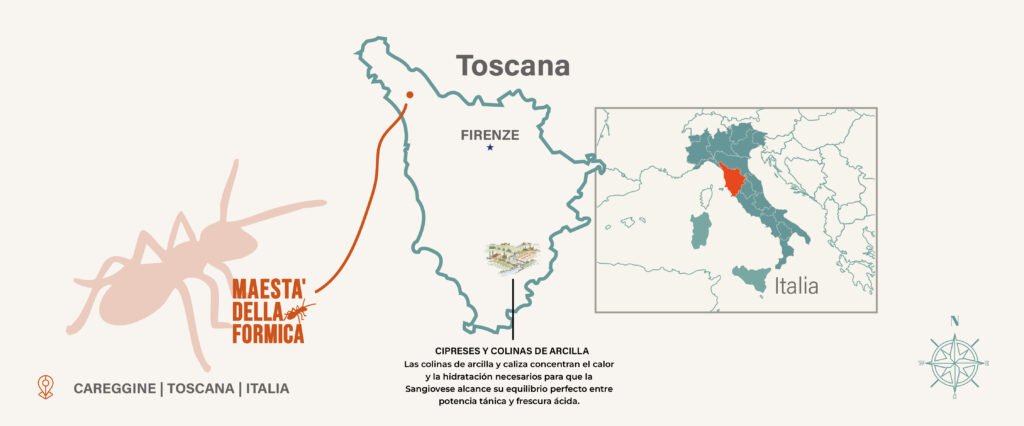
In addition to the lands in Careggine, the company has lands in the localities of Campo in the municipality of Gallicano, Roccalberti in the municipality of Camporgiano, Cascio in the municipality of Molazzana, Antisciana in the municipality of Castelnuovo di Garfagnana, where there are fruit crops , olives and vines.
2013
Foundation year
1
Hectares of vineyard
-
Bottles produced
Sangiovese, Merlot, Cabernet Sauvignon, Chardonnay. Riesling, Gamay, Ciliegiolo, Syrah, Abrusco, Ciliegiolo, Bonarda, Trebbiano and Malvasia
cultivated grapes
Biodinámica y Orgánica
viticulture
A lo que nos referimos con viticultura Biodinámica y Orgánica
The moon in relation to the earth and its sidereal cycles, the biodynamic agricultural calendar helps the farmer know the right time to prune, fertilize and harvest.
No herbicides are used and the vegetation is allowed to grow freely between the rows of the vines.
Natural fertilizers are made with animal excrement that is introduced into cow horns and buried to later dynamize them in water and apply it to the vineyard.
Organic fertilizers are used
as compost, manure and
other natural materials to enrich the soil and provide the nutrients necessary for the growth of vines.
Techniques are implemented to prevent soil erosion, such as planting vegetative covers between the rows of vines and applying minimal or no tillage practices.
During the winemaking process, chemical additives are avoided and the handling of the wine is minimized. The use of natural yeasts and the reduction of sulfites are encouraged.
Related products
-
Silvio Nardi
Brunello Di Montalcino 2013
1.5 LTS - Aurelio Settimo
-
Parusso
BAROLO “BUSSIA” 2004
750ML - Coppo